01
What matters
Northern Ireland plans stricter heating-oil rules for a market serving about two thirds of its households, according to BBC News NI’s 10 November 2026 report. The measures address supplier conduct, disputes and vulnerable consumers, without the price controls applied to gas and electricity markets.
02
Verified facts
- BBC News NI reported on 10 November 2026 that Northern Ireland’s heating-oil suppliers would face stricter regulation following a UK Competition and Markets Authority (CMA) inquiry.
- Economy Minister Caoimhe Archibald said she would act on the CMA’s recommendations, BBC News NI reported.
- BBC News NI reported that the measures include a mandatory code of conduct for heating-oil suppliers.
- The Consumer Council will have an enhanced role helping consumers resolve disputes, according to BBC News NI.
- The Consumer Council will lead creation of an opt-in register for vulnerable consumers, BBC News NI reported.
- The measures will not include the kind of price controls applied to gas and electricity markets, according to BBC News NI.
- About two thirds of Northern Ireland households use home-heating oil, BBC News NI reported.
- BBC News NI reported a record monthly rise of 92% in Northern Ireland heating-oil prices at the start of the US-Israel attack on Iran in March, without specifying the year.
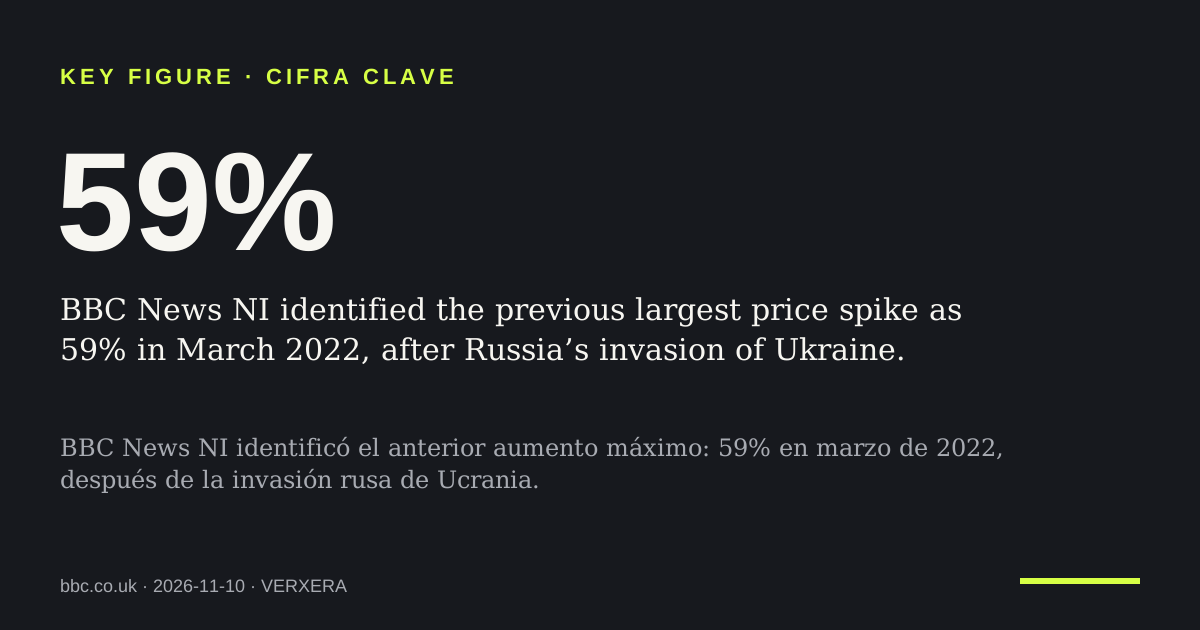
- BBC News NI identified the previous largest price spike as 59% in March 2022, after Russia’s invasion of Ukraine.
- According to BBC News NI, the CMA did not recommend price controls, suggesting they could be counterproductive.
03
Analysis
The measures described by BBC News NI concern supplier obligations and consumer support, rather than price controls. Its historical comparison measures monthly percentage increases in heating-oil prices, not prices per unit of fuel or the effects of the planned rules.
04 · VERXERA view
Editorial opinionVERXERA opinion: The evidence supports reading this as a consumer-protection package, not a promise of controlled prices. BBC News NI connects a fuel used by about two thirds of Northern Ireland households with mandatory supplier rules and stronger dispute support. Its reported monthly price increases—92% in March at the start of the US-Israel attack on Iran, with the year unspecified, versus the previous record of 59% in March 2022—show why that distinction matters: protections governing suppliers are different from limits on prices. Those historical figures do not establish what the measures will achieve. This account rests on BBC News NI’s report alone, and implementation timing remains unknown. Deeper source reading is worthwhile for understanding the protections’ scope, not for treating them as a price guarantee.
This is VERXERA’s editorial interpretation, separated from the facts and analysis above. The reader keeps the final judgment.
05
Counterevidence and limits
This account rests on BBC News NI’s report; the measures, figures and CMA position are those it reports.
06
Known uncertainties
BBC News NI’s report gives no implementation date or deadline. It does not specify the year of the March price increase at the start of the US-Israel attack on Iran.
01
Lo que importa
Irlanda del Norte prevé endurecer las normas del combustible de calefacción, utilizado por unos dos tercios de sus hogares, según BBC News NI del 10 de noviembre de 2026. Las medidas abarcan proveedores, disputas y consumidores vulnerables, sin controles de precios como los del gas y la electricidad.
02
Hechos verificados
- BBC News NI informó el 10 de noviembre de 2026 que los proveedores norirlandeses de combustible de calefacción afrontarán normas más estrictas tras una investigación de la Autoridad de Competencia y Mercados británica (CMA).
- La ministra de Economía, Caoimhe Archibald, dijo que actuaría conforme a las recomendaciones de la CMA, según BBC News NI.
- BBC News NI informó que las medidas incluyen un código de conducta obligatorio para los proveedores de combustible de calefacción.
- El Consumer Council tendrá un papel reforzado en ayudar a resolver disputas de consumidores, según BBC News NI.
- El Consumer Council encabezará la creación de un registro voluntario para consumidores vulnerables, informó BBC News NI.
- Las medidas no incluirán controles de precios como los aplicados al gas y la electricidad, según BBC News NI.
- Unos dos tercios de los hogares norirlandeses utilizan combustible de calefacción doméstica, informó BBC News NI.
- BBC News NI informó de un aumento mensual récord del 92% en los precios norirlandeses del combustible de calefacción al comenzar el ataque de Estados Unidos e Israel contra Irán en marzo, sin especificar el año.
- BBC News NI identificó el anterior aumento máximo: 59% en marzo de 2022, después de la invasión rusa de Ucrania.
- Según BBC News NI, la CMA no recomendó controles de precios, al considerar que podrían resultar contraproducentes.
03
Análisis
Las medidas descritas por BBC News NI abarcan obligaciones de proveedores y apoyo al consumidor, no controles de precios. La comparación histórica mide aumentos porcentuales mensuales, no precios por unidad de combustible ni efectos de las futuras normas.
04 · Opinión VERXERA
Opinión editorialOpinión de VERXERA: La evidencia respalda interpretar estas medidas como protección al consumidor, no como promesa de precios controlados. BBC News NI relaciona un combustible utilizado por unos dos tercios de los hogares norirlandeses con normas obligatorias y mayor apoyo ante disputas. Los aumentos mensuales que comunica —92% en marzo al comenzar el ataque de Estados Unidos e Israel contra Irán, sin precisar el año, frente al récord anterior del 59% en marzo de 2022— muestran la importancia de distinguir entre regular proveedores y limitar precios. Esas cifras históricas no demuestran qué lograrán las medidas. Este relato se basa únicamente en BBC News NI y sigue sin conocerse cuándo se aplicarán. Profundizar en la información resulta útil para entender el alcance de las protecciones, no para interpretarlas como garantía de precios.
Esta es la interpretación editorial de VERXERA, separada de los hechos y del análisis anteriores. El lector conserva la decisión final.
05
Contraste y límites
Este relato se basa en BBC News NI; las medidas, cifras y posición de la CMA son las que comunica ese medio.
06
Incertidumbres conocidas
BBC News NI no indica fecha de aplicación ni plazo. Tampoco especifica el año del aumento de marzo al comenzar el ataque de Estados Unidos e Israel contra Irán.