01
What matters
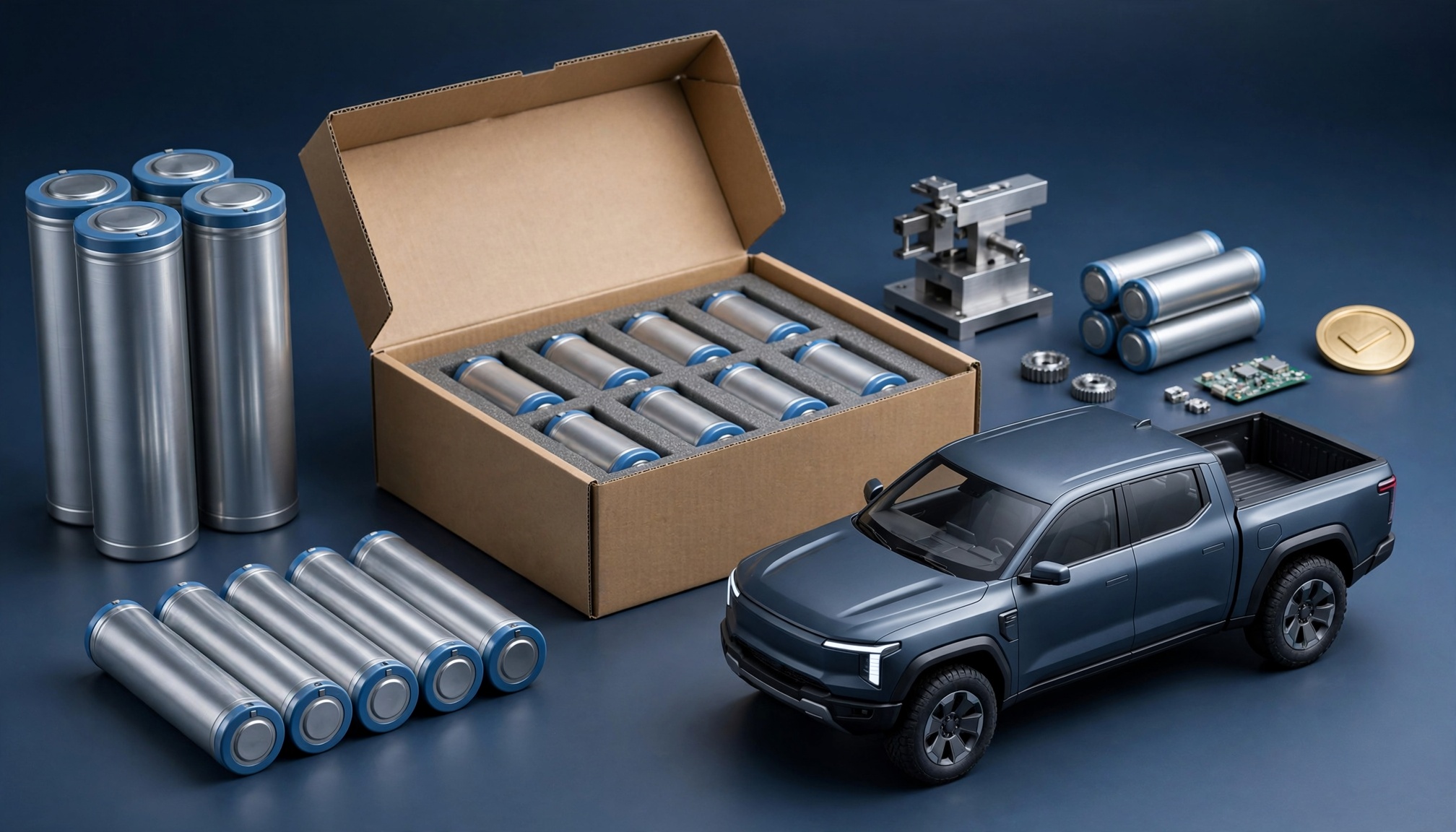
Ford began battery-cell production in Marshall, Michigan, in October 2026 and is shipping cells intended for Fathom electric-pickup prototypes, according to CNBC. The development advances the vehicle’s production preparations; Ford still planned to increase cell production in 2027, ahead of the pickup’s expected fourth-quarter 2027 launch.
02
Verified facts
- According to CNBC, Ford said production at its Marshall, Michigan, battery-cell plant began in October 2026 and cells were shipping.
- CNBC reported that the cells use technology licensed from CATL, a Chinese battery company.
- The plant’s cells are intended for prototypes of Ford’s Fathom small electric pickup, CNBC reported.
- CNBC reported expected plant capacity of 40 battery cells per minute, equivalent to 20 gigawatt-hours annually.
- That annual capacity is below the initial plan for up to 40 gigawatt-hours, according to CNBC.
- Ford said the facility remained in the early stages of certifying its processes, CNBC reported.
- According to CNBC, Ford planned to ramp up cell production in 2027.
- CNBC reported that the Fathom pickup was expected to launch in the fourth quarter of 2027.
- CNBC reported that U.S. Transportation Secretary Sean Duffy sent Ford CEO Jim Farley a letter in September expressing concern about Ford’s ties to Chinese companies.
03
Analysis
CNBC’s account distinguishes three stages: cells are shipping, process certification remains at an early stage, and a production ramp-up is planned for 2027. Expected capacity is not a measure of current output. The reported September letter provides policy context; it does not establish an effect on the production start, capacity or launch schedule.
04 · VERXERA view
Editorial opinionVERXERA opinion: CNBC’s report supports a concrete, limited conclusion: Ford has moved into battery-cell production and shipments, not demonstrated full-scale output. The October 2026 start and intended prototype use matter alongside expected capacity of 20 gigawatt-hours annually, compared with initial plans for up to 40 gigawatt-hours annually. Together, these facts distinguish an operating milestone from the scale originally envisioned. The expected pace of 40 cells per minute should likewise be read as capacity, not a recorded production rate. Early-stage process certification and the planned 2027 ramp-up keep that distinction material. This account rests on CNBC’s report alone. Deeper source reading is worthwhile for readers assessing production readiness rather than treating the start of shipments as evidence that the planned scale has been reached.
This is VERXERA’s editorial interpretation, separated from the facts and analysis above. The reader keeps the final judgment.
05
Counterevidence and limits
CNBC describes expected capacity and an early certification stage, not achieved annual output.
06
Known uncertainties
The current production rate, the date process certification will be completed and whether the expected fourth-quarter 2027 pickup launch will occur on schedule remain unstated.
01
Lo que importa
Ford comenzó a producir celdas de batería en Marshall, Michigan, en octubre de 2026 y está enviando celdas destinadas a prototipos de la camioneta eléctrica Fathom, según CNBC. El avance forma parte de los preparativos de producción del vehículo; Ford aún preveía aumentar la fabricación de celdas en 2027, antes del lanzamiento esperado para el cuarto trimestre de 2027.
02
Hechos verificados
- Según CNBC, Ford indicó que la producción en su planta de celdas de batería de Marshall, Michigan, comenzó en octubre de 2026 y que las celdas ya se estaban enviando.
- CNBC informó que las celdas utilizan tecnología licenciada de CATL, una empresa china de baterías.
- Las celdas de la planta están destinadas a prototipos de la camioneta eléctrica pequeña Fathom de Ford, informó CNBC.
- CNBC informó que la capacidad prevista de la planta es de 40 celdas de batería por minuto, equivalentes a 20 gigavatios-hora anuales.
- Esa capacidad anual es inferior al plan inicial de hasta 40 gigavatios-hora, según CNBC.
- Ford señaló que la instalación seguía en las primeras etapas de certificación de sus procesos, informó CNBC.
- Según CNBC, Ford planeaba aumentar la producción de celdas en 2027.
- CNBC informó que el lanzamiento de la camioneta Fathom estaba previsto para el cuarto trimestre de 2027.
- CNBC informó que el secretario de Transporte de Estados Unidos, Sean Duffy, envió en septiembre una carta al director ejecutivo de Ford, Jim Farley, expresando preocupación por los vínculos de Ford con empresas chinas.
03
Análisis
El relato de CNBC distingue tres etapas: las celdas ya se envían, la certificación de procesos sigue en una fase inicial y el aumento de producción está previsto para 2027. La capacidad esperada no mide la producción actual. La carta de septiembre aporta contexto político; no establece un efecto sobre el inicio de producción, la capacidad o el calendario de lanzamiento.
04 · Opinión VERXERA
Opinión editorialOpinión de VERXERA: La información de CNBC permite una conclusión concreta y limitada: Ford ha iniciado la producción y los envíos de celdas, sin demostrar una operación a plena escala. El inicio en octubre de 2026 y el destino de las celdas a prototipos deben leerse junto con la capacidad prevista de 20 gigavatios-hora anuales, frente al plan inicial de hasta 40 gigavatios-hora anuales. Estos datos distinguen un hito operativo de la escala originalmente contemplada. Asimismo, las 40 celdas por minuto representan capacidad prevista, no un ritmo registrado. La certificación inicial y el aumento productivo previsto para 2027 mantienen esa distinción. Este relato se basa únicamente en CNBC. Profundizar en la fuente resulta pertinente para evaluar la preparación productiva, sin interpretar los primeros envíos como prueba de que se alcanzó la escala prevista.
Esta es la interpretación editorial de VERXERA, separada de los hechos y del análisis anteriores. El lector conserva la decisión final.
05
Contraste y límites
CNBC describe una capacidad prevista y una certificación en etapa inicial, no una producción anual alcanzada.
06
Incertidumbres conocidas
No se precisan el ritmo actual de producción, la fecha de finalización de la certificación de procesos ni si el lanzamiento previsto para el cuarto trimestre de 2027 se cumplirá según lo programado.