01
What matters
Blockstream has launched a digital-asset custody system developed with Thales for institutions authorizing transactions, Cointelegraph reported on November 13, 2026. The report describes dedicated security hardware for signing and Adam Back’s argument for simpler, offline custody. The architecture is Blockstream’s stated design; Back’s security argument is an attributed position, not a demonstrated result.
02
Verified facts
- Cointelegraph reported that Blockstream launched an institutional digital-asset custody solution developed with Thales.
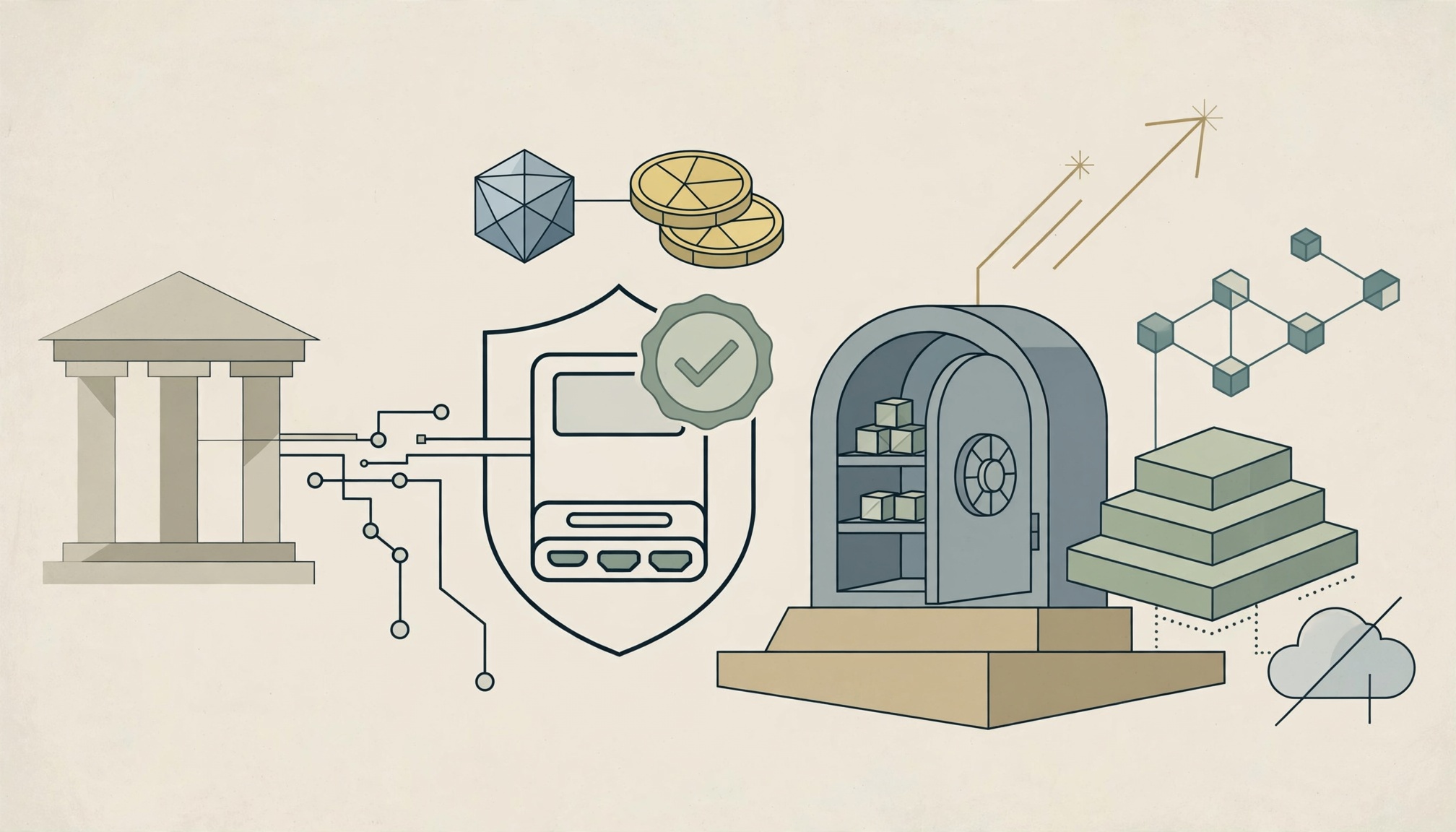
- According to Cointelegraph, the system combines Thales hardware security modules with Blockstream’s Secure Multi-Party Computation, or Secure-MPC, technology. It allows institutions to authorize transactions while keeping sensitive cryptographic operations inside dedicated security hardware.
- Blockstream said the entire signing protocol runs within the protected environment of Thales hardware security modules, according to Cointelegraph.
- Adam Back argued that conventional MPC protocols can be too complex and require too much communication between devices for fully offline cold storage, Cointelegraph reported.
- Cointelegraph reported that Back advocated cold storage, arguing that complexity works against security.
03
Analysis
The report connects an institutional custody launch with a debate about how transaction signing should work. Blockstream’s architectural claim concerns where the signing protocol executes: inside protected hardware. Back’s argument concerns the complexity and communication requirements of conventional MPC protocols in fully offline storage. These are related points, not interchangeable findings. Keeping signing operations inside security hardware does not, by itself, establish that the announced system operates fully offline or demonstrate its security performance.
04 · VERXERA view
Editorial opinionVERXERA opinion: The substantive development is the institutional custody architecture, not proof that simpler systems are necessarily safer. Cointelegraph’s description of the Thales hardware and Blockstream’s claim that the entire signing protocol stays inside it give concrete meaning to the launch. Back’s argument about the complexity of conventional MPC explains why offline operation matters to his preferred security approach. The connection is useful because it separates a stated design feature from a broader security judgment. The strongest limitation is that this account rests on Cointelegraph’s report alone; the architecture remains Blockstream’s description. Deeper source reading is worthwhile for understanding those design claims, not for treating the launch as evidence of proven security gains.
This is VERXERA’s editorial interpretation, separated from the facts and analysis above. The reader keeps the final judgment.
05
Counterevidence and limits
This account rests on Cointelegraph’s report; the architecture and security arguments are attributed statements in that report.
06
Known uncertainties
Whether the announced system supports fully offline operation, and how its security performs in practice, remain open questions.
01
Lo que importa
Blockstream lanzó un sistema de custodia de activos digitales desarrollado con Thales para instituciones que autorizan transacciones, informó Cointelegraph el 13 de noviembre de 2026. El artículo describe hardware de seguridad dedicado para la firma y el argumento de Adam Back a favor de una custodia más sencilla y desconectada. La arquitectura corresponde al diseño declarado por Blockstream; el argumento de Back es una postura atribuida, no un resultado demostrado.
02
Hechos verificados
- Cointelegraph informó que Blockstream lanzó una solución de custodia institucional de activos digitales desarrollada con Thales.
- Según Cointelegraph, el sistema combina módulos de seguridad de hardware de Thales con la tecnología de computación multipartita segura, o Secure-MPC, de Blockstream. Permite a las instituciones autorizar transacciones mientras mantiene las operaciones criptográficas sensibles dentro de hardware de seguridad dedicado.
- Blockstream afirmó que todo el protocolo de firma se ejecuta dentro del entorno protegido de los módulos de seguridad de hardware de Thales, según Cointelegraph.
- Adam Back sostuvo que los protocolos MPC convencionales pueden ser demasiado complejos y exigir demasiada comunicación entre dispositivos para el almacenamiento en frío totalmente desconectado, informó Cointelegraph.
- Cointelegraph informó que Back defendió el almacenamiento en frío y argumentó que la complejidad perjudica la seguridad.
03
Análisis
El artículo relaciona un lanzamiento de custodia institucional con un debate sobre cómo debe funcionar la firma de transacciones. La afirmación técnica de Blockstream se refiere a dónde se ejecuta el protocolo de firma: dentro de hardware protegido. El argumento de Back se centra en la complejidad y las necesidades de comunicación de los protocolos MPC convencionales para el almacenamiento totalmente desconectado. Son puntos relacionados, no conclusiones intercambiables. Mantener las operaciones de firma dentro de hardware de seguridad no establece, por sí solo, que el sistema anunciado funcione totalmente desconectado ni demuestra su desempeño en seguridad.
04 · Opinión VERXERA
Opinión editorialOpinión de VERXERA: La novedad sustantiva es la arquitectura de custodia institucional, no una prueba de que los sistemas más sencillos sean necesariamente más seguros. La descripción de Cointelegraph del hardware de Thales y la afirmación de Blockstream de que todo el protocolo de firma permanece dentro de él concretan el alcance del lanzamiento. El argumento de Back sobre la complejidad de los protocolos MPC convencionales explica la importancia de operar sin conexión en el enfoque que defiende. Esta relación permite distinguir una característica declarada de un juicio general sobre seguridad. La principal limitación es que este relato descansa únicamente en Cointelegraph; la arquitectura sigue siendo una descripción de Blockstream. Profundizar en la fuente sirve para entender esas afirmaciones de diseño, no para considerar el lanzamiento prueba de mejoras de seguridad demostradas.
Esta es la interpretación editorial de VERXERA, separada de los hechos y del análisis anteriores. El lector conserva la decisión final.
05
Contraste y límites
Este relato se basa en el artículo de Cointelegraph; la arquitectura y los argumentos sobre seguridad son declaraciones atribuidas en ese artículo.
06
Incertidumbres conocidas
Siguen abiertas las preguntas sobre si el sistema anunciado permite operar totalmente sin conexión y cuál es su desempeño de seguridad en la práctica.